
Why are so many channel partners and B2B customers disengaged, even when programs offer generous incentives? It’s a question we hear often, but there may be a better one. To get to the root cause, you might want to ask yourself: Are you buying loyalty, or actually designing it?
Usually, the real issue isn’t how much you’re spending — it’s what you’re spending it on, and how the program is designed.
The Incentive Illusion
Billions are spent on rebates, discounts, MDF and payouts each year. Yet most partner programs struggle to drive meaningful engagement.
This is what we call the Incentive Illusion — the belief that incentives alone automatically drive results.
If billions in rebates aren’t changing behavior, it’s not just an incentive problem. It’s a loyalty problem. Consumer loyalty marketers often face the same challenge: Programs that are too dependent on offers can become promotion engines instead of loyalty programs.
Luckily, the solution is similar. To fix it, we need to think bigger than payouts and start designing programs that shape behavior, build connections and earn mindshare.
Why Loyalty Matters in B2B
Just as consumer loyalty programs focus on emotional connection and long-term engagement, B2B programs must move beyond transactions to build true partner loyalty. Consumer loyalty programs have conditioned us to think differently about the brands we buy from. Once a customer opts into a loyalty relationship, the focus shifts from the single transaction to a longitudinal view of how today’s behavior impacts future status, perks and rewards.
In B2B, programs often default to incentives like rebates, discounts and MDF, which keep the focus on transactions. But loyalty is more than that. A mindset shift from “incentives” to “loyalty” might be exactly what it takes to fight disengagement and the Incentive Illusion.
Loyalty isn’t about partners “liking” your brand. It’s about them choosing your brand, consistently, even when they have other options. It’s when partners prioritize you in the thousands of micro-decisions they make every day. It’s your insurance in a crowded ecosystem.
Rebates may get attention, but they don’t build preference. Without loyalty, incentives become price wars. And that kind of mercenary loyalty only lasts until a better deal comes along.
Real loyalty isn’t bought; it’s designed.
Designing Partner Programs for Loyalty
The next era of channel incentives isn’t about bigger investments. It’s about better design.
Modern incentives are built around behavior because that’s what loyalty really is: a pattern of repeated, motivated behavior over time.
- Buying loyalty looks like bigger rebates, bigger rewards and uncomfortably bigger budgets (the kind of incentives every vendor offers).
- Designing loyalty means shaping behavior intentionally, considering how partners act and feel, not just what they earn.
Today, company-level commissions or rebates are the most common primary incentives. They play an important role. But partner incentives aren’t one-size-fits-all, which means rebates may not always be the answer, or at least the only answer.
Loyalty is consistently choosing your brand despite options.
The Loyalty by Design Framework
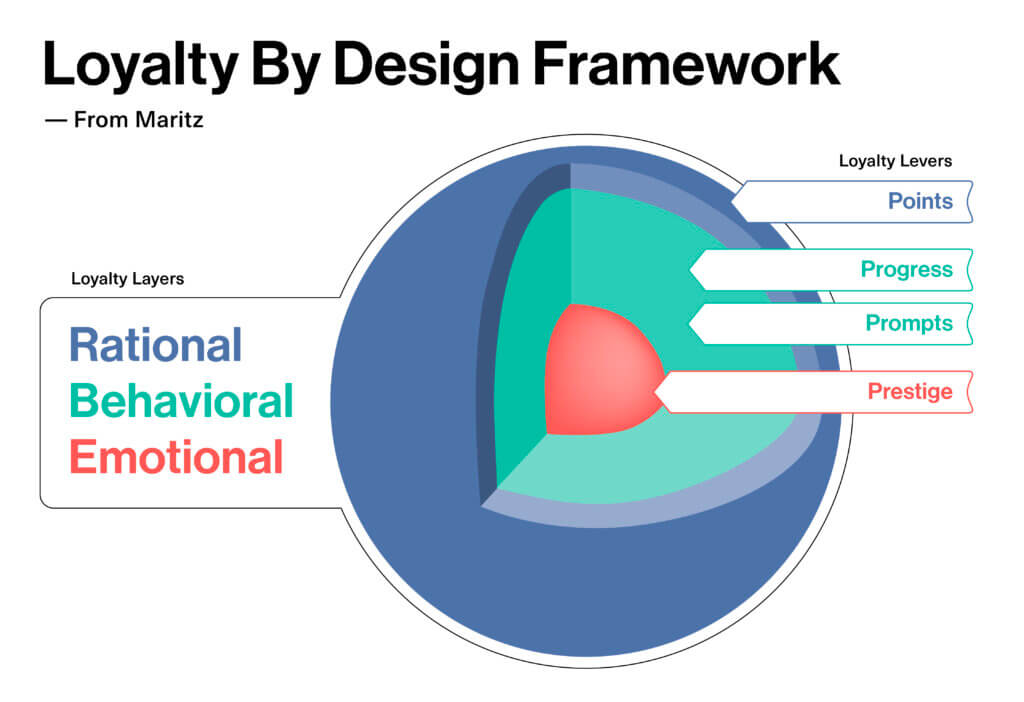
Drawing on our heritage as a global leader in engagement strategy, Maritz developed the Loyalty by Design Framework as the blueprint for bridging the gap between transactional rewards and genuine loyalty.
To better understand what will drive the behavior you want, you must start by examining why partners behave the way they do. Then, you can employ tactics that will be meaningful and effective.
The framework comes together in two parts, featuring the Loyalty Layers and Loyalty Levers.
- The Layers explain why partners behave the way they do.
- The Levers are the mechanics you can use to influence them.
Loyalty Layers
Why do we stay loyal to any brand? We like to think of ourselves, and our partners, as rational decision makers. We weigh ROI, compare margins and make smart, logical choices.
But in reality, it’s not just one thing driving our decisions. There’s more depth there, and it’s layered:
- Rational — the logical layer: Does this make business sense? (Commissions, payouts, points, pricing, contract terms)
- Behavioral — The practical layer: Can this realistically work for me? (Ease, habits, enablement, tools, communication)
- Emotional — The human layer: Does this make me feel valued and confident? (Exclusivity, status, community, recognition)
If any one of these layers is missing, your program will likely fall short. The best programs are designed for all three.
Loyalty Levers: The 4 Ps of Loyalty
Once you understand why partners behave the way they do, you can design experiences that activate those layers. These four simple but powerful levers do exactly that:
- Points – A Universal Currency
Points bring clarity and flexibility to channel programs without replacing transactional rewards partners already expect. They work alongside rebates and cash incentives, unifying multiple earning streams into a single partner wallet. This makes it easier to reward a full range of behaviors, from driving revenue to completing training, while giving partners the freedom to choose rewards that matter most to them. - Progress – Visual Motivation
People love to see how far they’ve come, and they also need to see what it will take to get where they’re going. Progress trackers, tiers and milestone dashboards turn abstract goals into tangible motivation by making effort visible and attainable. When partners can clearly see their distance to the next reward, status level or goal, they’re more likely to stay engaged and adjust their behavior. Targets are magnetic; progress is addictive. - Prompts – Timely Nudges
Programs don’t run on autopilot. Prompts keep the momentum going through communications that are timely, relevant and personalized. Think habit triggers, if/then earning rules, progress reminders or even “surprise and delight” moments with unexpected rewards. - Prestige – Recognition and Status
Prestige is the emotional spark. It’s about giving partners access, exclusivity or recognition that signals success. Rewards can be “unlocked” instead of redeemed. Sometimes that’s an invite to a leadership roundtable. Other times it’s public recognition or access to exclusive opportunities.
Together, these levers power engagement across all three loyalty layers, creating programs that influence behavior long after the payout.
Designing Rewards That Matter
Rewards in channel and B2B programs can take many forms: monetary payouts, symbolic recognition, access privileges, tangible merchandise and memorable experiences.
But the real question isn’t what the reward is — it’s why it matters.
Partners vary widely in how they sell, how they’re compensated and what motivates them. That’s why rewards should be designed as a portfolio, not a one-size-fits-all payout. The most effective programs design rewards that align with partner needs and motivations, whether that means:
- Celebrating personal success
- Supporting their teams
- Building their business
- Entertaining clients
- Developing professionally
When both the form and the role of rewards are intentionally aligned, programs move from transactional incentives to transformational loyalty.
You can learn more about the types of incentives and when to use them here.

5 Key Takeaways
- Loyalty isn’t bought — it’s designed
- Strong programs address rational, behavioral and emotional motivators.
- The 4 Ps — Points, Progress, Prompts and Prestige — bring loyalty to life.
- Great design matters more than big budgets.
- The future of incentives favors flexibility, personalization and meaning.
It’s time to move past the rebate race and start designing programs that partners want to be a part of.
We call that Loyalty by Design.
Because when you build programs that truly connect — everyone wins.