
Why aren’t our partners selling more? It’s the question that keeps channel leaders up at night. And the answer that many jump to? Their partners just aren’t motivated enough. But what if the real problem isn’t motivation at all?
92% of channel partners say participating in a program has a positive impact on their location’s business success. That’s the good news. Programs are valued. The challenge? Many are still built around three outdated assumptions:
- Channel partners are motivated by margins alone.
- If partners aren’t selling, it’s their fault.
- Partner loyalty is guaranteed if they’ve been around for years.
Here’s what we’re actually seeing: Partners stop participating when programs don’t provide the support and mutual value they’re looking for. And loyalty? That doesn’t just happen automatically. Just because someone’s been around for years or the margins look good doesn’t mean they’re staying.
Let’s break down the three myths holding manufacturing channel programs back and find out exactly what to do to build stronger partnerships that actually last.
False Belief #1: Channel Partners Are Motivated by Margins Alone
What really motivates channel partners beyond financial incentives?
Many leaders in manufacturing think financial incentives are the most effective way to get partners selling.
The reality: Incentives and margins DO matter, but what actually keeps partners engaged are things like enablement, ease of doing business and support. When your average partner is juggling nine programs at once, the one that doesn’t make them work to understand it wins their attention.
Key stats*:
- 35% of partners say easy participation is critical for defining the best program experiences.
- 31% of participants have disengaged because rules were confusing.
- The average channel partner is enrolled in 8.9 programs at once.
*Sourced from Maritz’s Insights Study, “Best the Best: Defining Exceptional Channel Incentive Programs”
What it means for programs: When nine programs are competing for the same partner’s attention, the deciding factor isn’t always the payout. It’s about which one feels easiest to work with and win deals in.
Action item: Design your program for simplicity first. Focus on:
- User-friendly interface with easy access to training and sales resources, claim submissions, performance data and support.
- Straightforward rules that give partners clear next steps.
- Self-service confidence so partners can move forward on their own.
Competitors can offer incentives that fade fast. You can deliver experiences that create something deeper: emotional loyalty.
Flexibility Makes Your Program an Easy Choice
Mixing reward types proves your commitment to shared success. Partners gain flexibility and experiences that match their effort while you build motivation that lasts beyond margins and money. Consider layering in:
- Business-building rewards (MDF, rebates, SPIFFs, discounts, promotions, samples)
- Memorable experiences (VIP concert packages, Super Bowl tickets)
- Meaningful items (camping gear, luxury merchandise, branded gifts)
- Individual and group travel (ski resorts, wine tasing tours, international excursions)
- Symbolic rewards (certificates, awards, public recognition)
- Access-based incentives (first-look demos, exclusive passes, early access to new products)
False Belief #2: If Partners Aren't Selling, It's Their Fault
Why do partners underperform in manufacturing channel partner programs?
When performance slows down, it’s easy to assume partners just aren’t putting in the effort.
The reality: It’s easy to look at underperforming partners and assume they’re not motivated. And sometimes that might be true. But before you write them off, look at what you’re actually giving them to work with. More often than not, it’s not partner apathy, it’s gaps on the manufacturers side like poor training, weak demand generation and friction-filled processes.
Key stats*:
- 39% of channel partners say new skill/knowledge development is a top factor in the best programs.
- Partners rank access to sales collateral as equally important as rule clarity, reward value and communication quality.
- 69% rated personalized performance reporting as critical (but it’s still underutilized in may programs).
*Sourced from Maritz’s Insights Study, “Best the Best: Defining Exceptional Channel Incentive Programs”
What it means for programs: When partners underperform, it usually means something in their journey is broken. Training might be hard to find, they can’t track their progress or sales collateral is out of date. Partners can’t sell what they don’t understand, and they can’t be motivated if they don’t know where they stand in the program either.
Common Manufacturer-side Gaps
- Lack of early onboarding support or skill development
- Limited training resources and outdated sales materials
- Complex opt-in requirements or earning rules
- No progress visibility or personal performance data
Action item: Review the steps you’re already taking to support each stage of the partner journey and look for hidden gaps where additional support is needed:
- Segment partners by tier level (top-performers, mid-level and churn-risk groups) and by partner journey stage (Activation, Enablement, Growth and Loyalty).
- Forecast activity patterns across each segment.
- Enable partners accordingly with personalized resources.
- Set up modern platform features like performance dashboards and hubs for training or sales collateral.
- Partners need visibility, the right resources, a clear path for growth and easy access to all of it. Updating training, current sales collateral and having responsive support aren’t just nice-to-haves. They’re must-haves for participation.
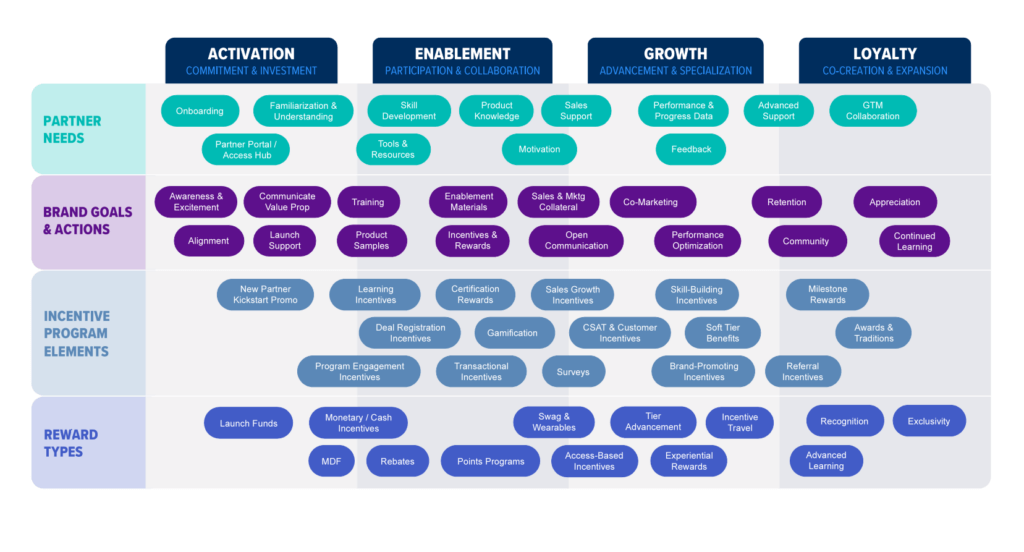
Want a deeper dive into the partner journey and key needs at each stage? Read “Designing Winning Incentives for Your Partner Journey.”
False Belief #3: Partner Loyalty Is Guaranteed If They've Been Around for Years
Why do long-term partners switch vendors?
Many manufacturers assume that long-standing partnerships will be loyal no matter what.
The Reality: It’s easy to treat 10-year partnerships like they’re bulletproof. And why wouldn’t we? They’ve stayed this long already. But loyalty isn’t a status you can achieve once and keep without effort. It’s built on experience, and when that experience stays the same while competitors evolve their programs, even your most loyal partners start looking elsewhere.
Key stats*: Maritz research revealed these are the most common reasons for disengagement, even among long-standing partners:
- Rewards were too hard to earn or took too long
- Communications and offers weren’t relevant
- Rewards weren’t appealing
- Rules weren’t clear or were confusing
*Sourced from Maritz’s Insights Study, “Channel Incentives: Protecting Your Budget, Boosting Your Returns for 2025 & Beyond”
When asked what influences brand recommendations on a scale of 0 to 5 (with 0 having no influence and 5 having strong influence), most partners ranked:
- Product quality (4.2)
- Profit to business (4.2)
- Customer demand (4.2)
- Availability of incentives (4.1)
- Short-term discounts (3.9)
What it means for programs: Loyalty often dissolves slowly, not overnight. It starts with small frustrations from unclear rules, irrelevant emails, rewards that feel impossible to earn and no clear path to growth. And what really drives partners away? When they’re expected to generate their own demand. Without things like co-marketing, sales enablement or campaign support, they’ll turn to competitors who offer it.
Action item: Don’t assume tenure means loyalty. Think of the partnership as an ongoing investment, not something you can just set and forget.
- Recognize milestones like anniversaries or achievements.
- Personalize communications to meet partners where they are today, not where you expect them to be.
- Evolve your program with updated offerings based on current partner needs.
- Invest in demand generation with co-marketing and campaign support to help partners grow their business, not just sell your products.
Years of history is great, but it only matters if the partner experience keeps delivering. Long-standing partners need a reason to stay, not just reminders of how long they’ve been around.
Early Signs of “Quiet Disengagement”
It can be a slow fade but when long-term partners start to disengage, they may:
- Sign up but show no activity
- Go through the motions or do the bare minimum to sell
- Stop responding to communications
- Avoid opting into training or earning new certifications
- Submit fewer claims or redeem fewer rewards
- Make fewer referrals and ignore surveys
Keep reading: Are Your Channel Partners Quiet? Here’s What to Do About It
From Channel Myths to Measurable Results
The myths holding your program back aren’t just hypothetical. They’re blind spots that cost you engagement and revenue, and your partners notice them before you do.
Your next move? Take a look at your own program and give it a quick audit.
Ask yourself:
- Are partners spending more time figuring out rules than selling?
- Do they have easy access to training and sales collateral?
- Can they see their progress without asking for it?
- Are your communications relevant or just routine?
Find one friction point and fix it. Simplify a process, update a resource or take steps to make performance data accessible. Then ask: Does your program earn real loyalty or just secure passive participation?